
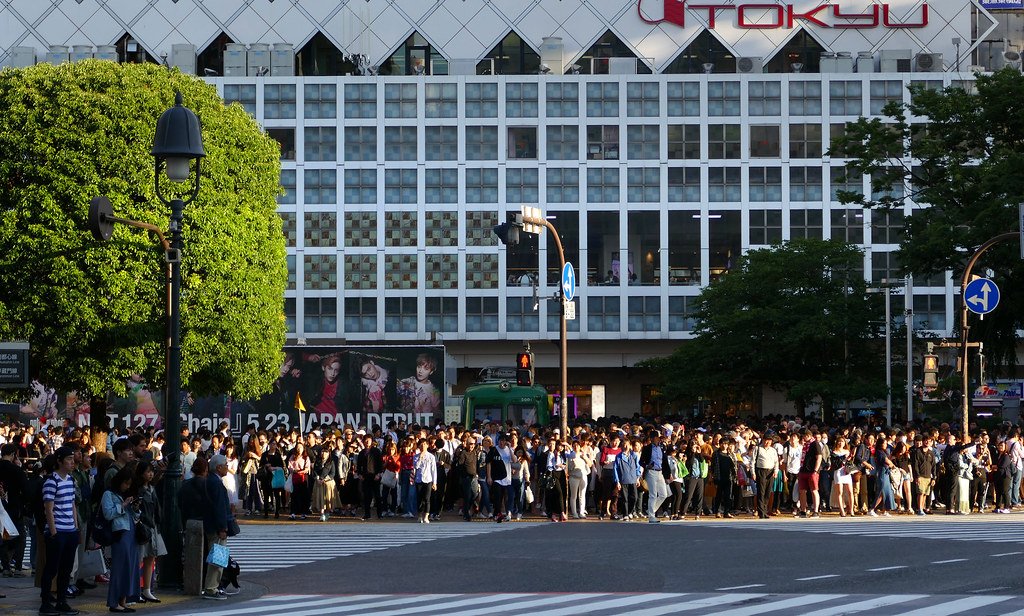
Tokyo rewards visitors who plan in neighbourhoods rather than in landmarks. The city is enormous, but its train network is so good that five days is genuinely enough to see the highlights without spending your holiday underground. This itinerary groups each day around one part of the city so you walk more and commute less.
Before you go: three decisions that shape the trip
Where to base yourself
Staying near a major JR or metro interchange matters more than staying near a specific sight. Shinjuku and Tokyo Station suit first-timers because almost every line passes through them. Shibuya is livelier and younger. Asakusa is cheaper and more traditional but adds travel time to the west of the city. Ueno is a sensible compromise if you are arriving from Narita.
Transport passes
A nationwide Japan Rail Pass rarely pays for itself if you are only in Tokyo. A rechargeable IC card such as Suica or PASMO is the practical choice: tap in and out of trains, buses and most convenience stores. Add it to your phone’s wallet if your device supports it and you can skip the ticket machines entirely.
Cash and connectivity
Japan is far more card-friendly than it once was, but small restaurants, shrines and markets still favour cash. Carry a modest amount and top up at convenience store ATMs, which accept foreign cards reliably. A travel eSIM or pocket wifi is worth arranging before departure, because navigation apps do most of the heavy lifting on a trip like this.
Day 1: Shinjuku and the west side
Start gently, because jet lag is real. Shinjuku Gyoen is the ideal first stop: a large, calm garden that blends French, English and Japanese styles, and one of the best places in the city to reset your body clock in daylight. From there, walk to the Tokyo Metropolitan Government Building, where the observation decks are free and give you a proper sense of the city’s scale. On a clear winter morning you may see Mount Fuji on the horizon.
In the evening, explore Omoide Yokocho and Golden Gai, two tight clusters of tiny bars and grill counters that survive from post-war Tokyo. Many seat six or eight people. Some charge a small cover, and a few are regulars-only, so read the door signs before you duck inside.
Day 2: Asakusa, Ueno and the old east
Senso-ji, Tokyo’s oldest temple, is busiest in the middle of the day. Arrive before nine and the approach along Nakamise-dori is calm enough to enjoy. Afterwards, walk through Kappabashi, the kitchenware street where restaurants buy their knives, ceramics and the plastic food models you see in shop windows. It is one of the better places in the city for gifts that are not generic souvenirs.
Spend the afternoon in Ueno Park. The Tokyo National Museum holds the country’s most important collection of Japanese art and is worth two hours even if museums are not usually your thing. If you are travelling with children, the park also has a zoo and enough open space for a genuine break in the day.
Day 3: Shibuya, Harajuku and Meiji Jingu
Begin at Meiji Jingu, a forested shrine complex that feels startlingly remote given it sits beside one of the busiest stations in the world. The gravel approach under the timber torii gates takes about ten minutes and is the point of the visit as much as the shrine itself.
Exit into Harajuku for Takeshita-dori and the very different, more considered boutiques along Cat Street. Finish in Shibuya at dusk, when the famous scramble crossing is at its most photogenic. For the classic overhead view, the free vantage points inside the surrounding shopping centres are usually just as good as the paid observation decks.
Day 4: A day trip to Hakone or Nikko
Five days in Tokyo leaves comfortable room for one day outside the city, and it lifts the whole trip.
- Hakone — hot springs, a lake crossing and, on a clear day, views of Mount Fuji. A regional loop ticket covers the train, cable car, boat and bus in one purchase.
- Nikko — dense forest, waterfalls and the extravagantly decorated Tosho-gu shrine complex, which is a deliberate contrast to the restraint of most Japanese temples.
- Kamakura — the shortest journey of the three, with a Great Buddha, coastal walks and a quieter pace.
Whichever you choose, leave early. These are all comfortable day trips, but they stop being relaxing if you start at eleven.
Day 5: Tsukiji, Ginza and the bay
The wholesale fish auction moved to Toyosu, but Tsukiji Outer Market still operates as a busy street-food strip and is the better visit for most travellers. Go hungry and early. Afterwards, walk into Ginza for the department store food halls in the basements, which are a spectacle in their own right and a good place to assemble lunch.
Close the trip at teamLab’s digital art installations or with a walk around the Imperial Palace East Gardens, depending on whether you want stimulation or calm on your final evening.
What it costs
Tokyo has a reputation for being expensive that no longer entirely holds. Accommodation and imported goods are pricey, but eating well is not: a bowl of ramen, a set lunch or a convenience store meal are all remarkably good value by Western European standards. Transport within the city is cheap, and many of the best experiences here, including Meiji Jingu, Shinjuku Gyoen and the government building observatories, are free or close to it.
Exchange rates and prices move constantly, so treat any figure you read online as a rough guide and confirm before you book.
Practical tips that make a difference
- Avoid the 8am and 6pm commuter peaks if you are carrying luggage.
- Coin lockers at major stations are inexpensive and let you explore on arrival and departure days.
- Rubbish bins are scarce in public. Carry a small bag for your own waste, as residents do.
- Escalator etiquette differs by city. In Tokyo, stand on the left.
- Many smaller restaurants are cash-only and seat solo diners at a counter. Sitting alone is completely normal.
Frequently asked questions
Is five days enough for Tokyo?
Yes, for a first visit. Five days covers the major neighbourhoods at a sensible pace and still allows one day trip. You will not exhaust the city, but you will leave with a genuine sense of it.
Do I need to speak Japanese?
No. Signage on trains and in major stations is bilingual, and translation apps handle menus well. Learning a few courtesies is appreciated but not required.
Is Tokyo good for a first trip to Asia?
It is one of the easiest introductions available. Public transport is reliable and clearly signposted, crime rates are low and standards of service are consistently high.
Should I buy a Japan Rail Pass for a Tokyo-only trip?
Usually not. The pass is designed for long-distance travel between cities. If you are staying in Tokyo with one day trip, an IC card will almost certainly cost less.
What is the best area to stay in for a first visit?
Shinjuku or Tokyo Station. Both are major interchanges, which keeps daily travel times short and makes airport transfers straightforward.
Pingback: Bali Itinerary: How to Spend 7 Days in Bali - Lisa World Travel
Pingback: Vietnam Itinerary: 10 Days from Hanoi to Ho Chi Minh City - Lisa World Travel