
Vietnam is long, narrow and more varied than most visitors expect. It stretches well over a thousand miles from north to south, which means the classic mistake is trying to see all of it in ten days and spending half the trip on transport. This itinerary moves in one direction, uses internal flights where they save a full day, and leaves enough space to actually enjoy each stop.
North to south, or south to north?
Either works, and the deciding factor is usually the weather. Vietnam does not have a single national climate: while the south is warm and stable year-round, the north has a genuine cool season and the central coast has a distinct wet period in autumn. Check conditions for your specific dates and travel in whichever direction gives you the better weather at the start.
This itinerary runs north to south, finishing in Ho Chi Minh City, which tends to have the more convenient long-haul departures.
Days 1 to 3: Hanoi
Hanoi is the more atmospheric of Vietnam’s two big cities. The Old Quarter is a dense grid of narrow streets historically organised by trade, and the best way to understand it is simply to walk without a fixed plan. Give yourself a full day to adjust before attempting anything ambitious.
Worth your time: the Temple of Literature, Vietnam’s first university and a genuinely peaceful escape from the traffic; the Ho Chi Minh Mausoleum complex; and Hoan Kiem Lake at dawn, when the surrounding streets fill with people exercising. The Vietnamese Women’s Museum is among the best-curated museums in the country and is frequently overlooked.
Eat breakfast like a local. Pho, banh mi and egg coffee are all Hanoi specialities, and the small plastic-stool places on street corners are usually better than anywhere with an English menu outside.
Days 4 and 5: Ha Long Bay or Ninh Binh
Ha Long Bay is the famous one: thousands of limestone karsts rising out of the water, best seen on an overnight boat rather than a day trip. Day trips involve four hours of driving for a few hours on the water. An overnight cruise, ideally in the quieter Lan Ha Bay area, is a much better experience.
Ninh Binh offers similar karst scenery on land, explored by small rowing boat through river caves and rice paddies. It is closer to Hanoi, cheaper, less crowded and increasingly the choice of repeat visitors. If you have to pick one and you dislike crowds, pick this.
Days 6 and 7: Hoi An
Fly from Hanoi to Da Nang and transfer to Hoi An, roughly forty minutes by road. The flight saves the better part of two days compared with the train, which matters on a ten-day trip.
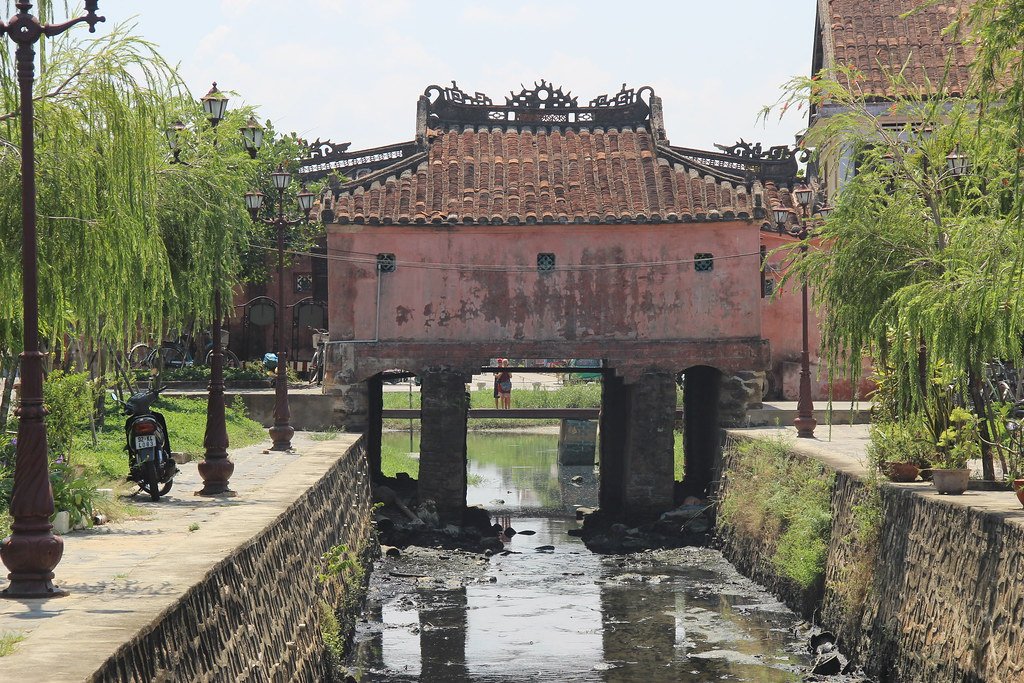
Hoi An’s old town is a preserved trading port of timber shophouses, Chinese assembly halls and a Japanese covered bridge, lit by silk lanterns after dark. It is undeniably touristy and still completely worth it. Rent a bicycle and ride out to the rice fields or the beach, which is where the town becomes genuinely relaxing.
Hoi An is also Vietnam’s tailoring capital. If you want clothes made, allow at least two full days for fittings and choose a tailor on the strength of recent, specific reviews rather than a street pitch.
Day 8: Hue or the Hai Van Pass
Hue, the former imperial capital, is a straightforward day trip or overnight stop north of Hoi An, with a walled citadel and a string of royal tombs along the Perfume River. The journey there crosses the Hai Van Pass, a coastal mountain road with some of the best views in the country. Many travellers do this stretch by private car with photo stops, or by motorbike with a driver and a separate luggage transfer.
Days 9 and 10: Ho Chi Minh City and the Mekong Delta
Fly south to Ho Chi Minh City, still widely called Saigon. It is faster, louder and more commercial than Hanoi, and the contrast between the two is one of the more interesting things about travelling the length of the country.
The War Remnants Museum is confronting and essential context for understanding modern Vietnam. The Reunification Palace is preserved largely as it was in 1975. For a half-day outside the city, the Cu Chi tunnels are the usual choice; for a full day, the Mekong Delta offers boat trips through floating markets and coconut groves.
Practical advice
- Check visa requirements early. Rules vary considerably by nationality and change periodically. Confirm the current position with an official source well before booking.
- Use ride-hailing apps in both major cities. They fix the fare and remove any negotiation.
- Crossing the road is a skill. Walk slowly and predictably and let the scooters flow around you. Do not stop suddenly or run.
- Carry cash. Cards work in hotels and larger restaurants, but street food, markets and small operators are cash-only.
- Internal flights are cheap and frequent between Hanoi, Da Nang and Ho Chi Minh City. On a short trip they are usually worth it.
- Book the overnight train if you want the scenic Da Nang to Hue coastal stretch without driving it.
Frequently asked questions
Is 10 days enough for Vietnam?
It is enough for a satisfying north-to-south route covering Hanoi, one karst landscape, Hoi An and Ho Chi Minh City. It is not enough to add the far north around Sapa or the southern islands without rushing.
Should I fly or take the train between cities?
On a ten-day trip, fly the long stretches. The railway is scenic and comfortable but slow across the full length of the country. The exception is the short Da Nang to Hue coastal section, which is genuinely worth doing by rail.
Ha Long Bay or Ninh Binh?
Ha Long Bay for the iconic seascape, ideally as an overnight cruise. Ninh Binh for a quieter, cheaper and more rural version of the same limestone scenery, and an easier trip from Hanoi.
When is the best time to visit Vietnam?
There is no single answer, because the north, centre and south have different climates. Broadly, spring and autumn give the best national compromise. Check conditions for the specific regions and dates you are considering.
Is Vietnam easy for first-time visitors to Asia?
Yes, with a little patience. Tourist infrastructure is well developed, costs are low and transport links are good. The traffic and the pace take a day or two to adjust to.