
Choosing where to stay matters more in Bali than in almost any destination of its size. The island is bigger than it looks on a map, the roads are slow, and there is no single centre that puts everything within reach. Book the wrong base and you will spend your holiday in traffic. This guide covers the main areas, who each one suits, and how to combine two or three into a realistic trip.
First, understand the distances
Journeys in Bali take far longer than the distance suggests. Roads are narrow and congested, particularly in the south, and a trip that looks like thirty minutes can easily take ninety at the wrong time of day. Ubud to the southern beaches is a significant undertaking, not a casual afternoon errand.
The practical conclusion: do not try to base yourself in one place and day-trip to everything. Split your stay between two or three areas instead.
Ubud: culture, rice terraces and green interior
Inland and noticeably cooler than the coast, Ubud is the cultural heart of the island: temples, traditional dance performances, art markets, yoga studios and rice terraces. It is also where most of the wellness and retreat scene is concentrated.
The centre is busy and commercial, and the traffic through it can be miserable. Staying ten or fifteen minutes out, in the surrounding villages and rice fields, gives you the same access with far more calm.
Best for: culture, greenery, wellness, families who want a break from the beach.
Less good for: swimming. There is no beach, and most accommodation relies on pools.
Seminyak: restaurants, beach clubs and comfort
The most developed and polished of the southern beach areas, with the island’s densest concentration of good restaurants, spas and boutique shopping. The beach is long and wide with reliable sunsets, though the surf can be strong and is not always ideal for casual swimming.
Best for: food, comfort, shopping, couples, anyone who wants amenities within walking distance.
Less good for: travellers looking for somewhere quiet or undeveloped.
Canggu: surf, cafes and a younger crowd
North of Seminyak, Canggu grew from a quiet surf village into the centre of Bali’s remote-working and cafe scene. Black sand beaches, consistent surf breaks, endless brunch spots and a lively evening scene. It has become genuinely busy in recent years, and the traffic on the narrow lanes reflects that.
Best for: surfers, longer stays, solo travellers, anyone working remotely.
Less good for: families with small children, and anyone expecting the sleepy village it was a decade ago.
Uluwatu and the Bukit Peninsula: cliffs and the best beaches
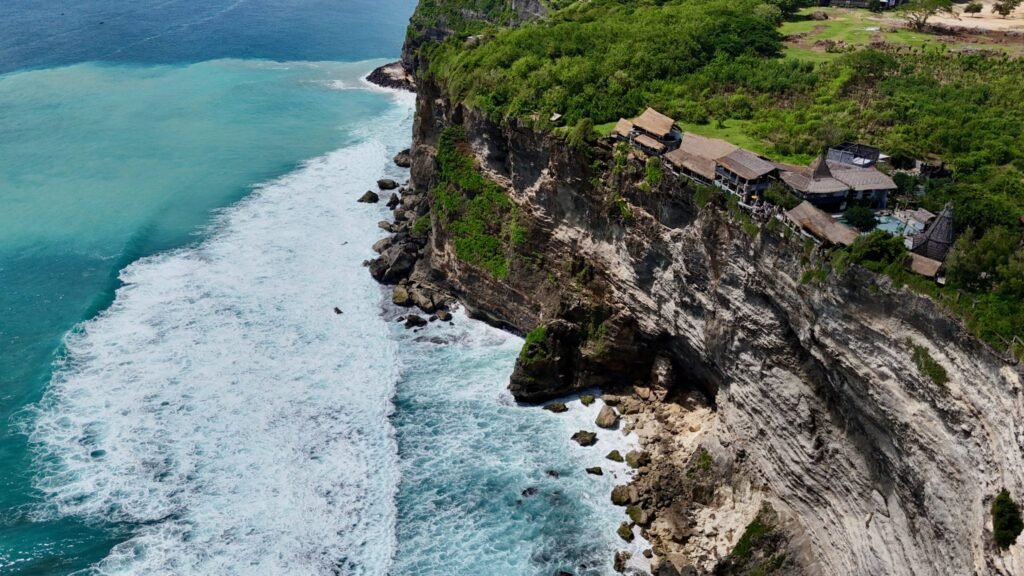
The southern peninsula has Bali’s most dramatic coastline: limestone cliffs, white sand coves reached by long staircases, and the clifftop Uluwatu Temple, famous for its sunset kecak dance performances. The water here is clearer and bluer than the beaches further north.
The trade-off is that the area is spread out and hilly, so you will rely on transport for almost everything, and many of the best beaches involve a steep descent and climb.
Best for: scenery, serious surfers, honeymooners, the best swimming beaches.
Less good for: anyone who wants to walk everywhere or has mobility limitations.
Sanur and Nusa Dua: calm water and families
On the east and southeast coasts, both are protected by reefs, which makes the water calm and genuinely swimmable, unlike much of the west coast surf. Sanur is the more characterful of the two, with a long seafront path and an older, quieter crowd. Nusa Dua is a planned resort enclave: manicured, self-contained and low on local atmosphere, but very easy with children.
Sanur is also the departure point for fast boats to the Nusa Islands.
Best for: families, calm swimming, a slower pace.
Less good for: nightlife and dining variety.
The Nusa Islands: a worthwhile add-on
Nusa Penida, Nusa Lembongan and Nusa Ceningan sit off the southeast coast, reachable by fast boat from Sanur. Penida has the dramatic cliff viewpoints that dominate Bali’s social media presence; Lembongan is smaller, gentler and better for a relaxed couple of nights.
Roads on Penida are rough and the famous viewpoints involve steep, sometimes precarious descents. Day trips are long and rushed. Two nights is far better than one long day.
Suggested combinations
- One week, first visit — three nights Ubud, four nights Seminyak or Uluwatu.
- Ten days — three nights Ubud, three nights Uluwatu, two nights Nusa Lembongan, two nights Seminyak.
- With children — Sanur or Nusa Dua as the main base, with two or three nights in Ubud.
- Surf-focused — Canggu and Uluwatu, splitting the time between them.
- Two weeks — add the quieter north or east coast, around Amed or Lovina, for diving and a genuinely slower pace.
Frequently asked questions
Where should I stay in Bali for a first visit?
Split your time between Ubud and one southern coastal area, usually Seminyak or Uluwatu. That combination gives you the cultural interior and the coast without long daily drives.
Is Ubud worth staying in, or just a day trip?
Worth staying in. The drive from the southern beaches is long enough that a day trip wastes most of the day, and Ubud is at its best early in the morning and in the evening.
Which part of Bali has the best beaches?
The Bukit Peninsula around Uluwatu has the most striking white sand and clearest water. For calm, swimmable water with easy access, Sanur and Nusa Dua are better.
Do I need to rent a scooter?
No. Ride-hailing apps and private drivers are widely available and inexpensive for longer journeys. Scooter accidents are a common cause of injury among visitors, and many insurance policies will not cover you without the correct licence.
How many areas should I stay in on a one-week trip?
Two. Three is possible but means packing and a slow transfer every couple of days, which eats into a short trip.
Pingback: Bali Itinerary: How to Spend 7 Days in Bali - Lisa World Travel