
Some links in this post are booking links. If you book through them we may earn a small commission at no extra cost to you. We only link to services we would use ourselves, and it never changes what we recommend.
Peru is an altitude problem disguised as an itinerary problem. Cusco sits at around three thousand four hundred metres, which is high enough that a significant number of visitors feel genuinely unwell on their first day. Sequence your trip badly and you can lose two of your ten days to a headache.
This itinerary is built around acclimatising sensibly, which conveniently also puts the best scenery in the right order.
The altitude rule that shapes everything
Counterintuitively, you should not go straight from Cusco to Machu Picchu, and you should not do anything strenuous on your first day in the mountains.
Machu Picchu is roughly a thousand metres lower than Cusco, which is why many people feel better there. The Sacred Valley is lower again, which makes it the ideal place to spend your first couple of nights before returning to Cusco properly acclimatised.
Take the first day very slowly, drink far more water than usual, go easy on alcohol, and eat lightly. If you are considering altitude medication, speak to a doctor well before you travel. Serious altitude illness is rare but real, and the only reliable treatment is descending.
Days 1 and 2: Arrive and go down, not up
Fly into Cusco, usually via Lima, and travel straight out to the Sacred Valley rather than staying in the city. Pisac or Urubamba both work well.
Spend the first afternoon doing nothing. On day two, the Pisac ruins and market make a gentle introduction, with terraces stacked up the hillside above the valley. Ollantaytambo, with its enormous terraced fortress and a genuinely intact Inca street plan, is the other essential stop and the best place to sleep before the train.
Days 3 and 4: Machu Picchu
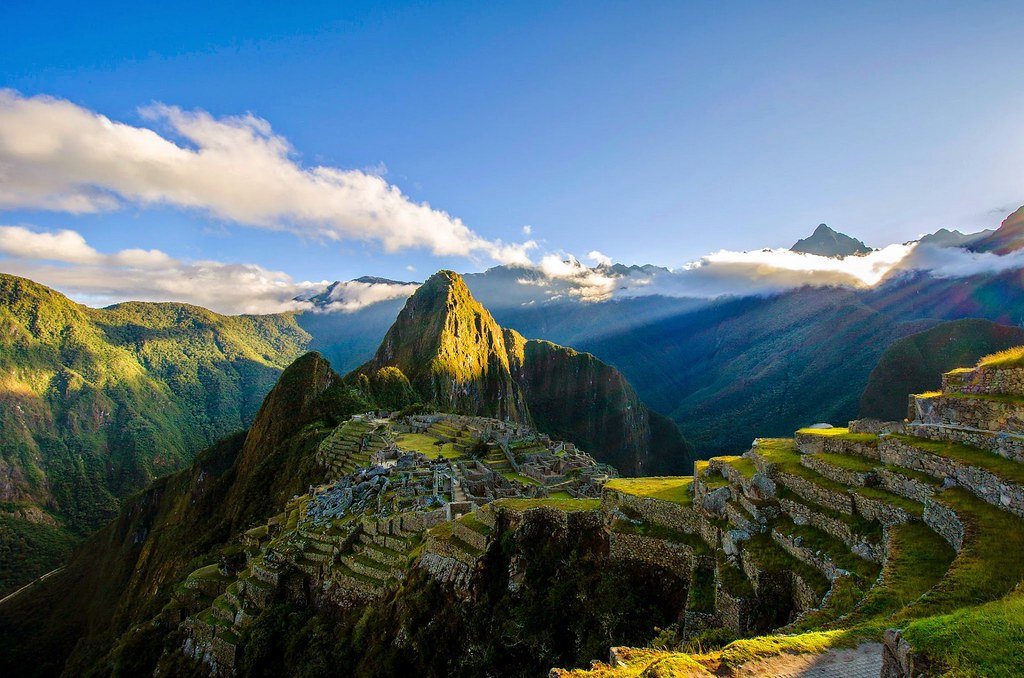
The train from Ollantaytambo to Aguas Calientes takes around ninety minutes through a spectacular gorge. Stay overnight in Aguas Calientes so you can be on an early bus rather than arriving mid-morning with the day-trippers.
Machu Picchu now operates on timed entry with defined circuits, capped daily numbers and compulsory guides for some routes. The add-on climbs, Huayna Picchu and Machu Picchu Mountain, are separately ticketed and sell out furthest ahead. These rules change regularly, so book through the official channels as soon as your dates are fixed and verify the current system rather than relying on any guide.
Give it a full morning. The site is larger than photographs suggest and the light changes completely as the cloud lifts.
Where to stay along the route
Sacred Valley lodges and Aguas Calientes hotels both fill early in dry season. Compare each stop:
Days 5 to 7: Cusco
Return to Cusco, now comfortably acclimatised. It is a genuinely beautiful city and deserves more than the night most itineraries give it.
The essentials: Qorikancha, where a colonial church sits directly on Inca foundations that survived the earthquakes better than it did; the cathedral on the Plaza de Armas; the San Pedro market; and Sacsayhuamán on the hill above town, with stonework that remains difficult to explain.
Use one of these days for Rainbow Mountain or the Humantay Lake hike if you want a high-altitude day. Both involve very early starts and serious elevation, well above five thousand metres in the case of Rainbow Mountain, so do them only once acclimatised and never on arrival.
Days 8 to 10: Lima, or Lake Titicaca
Two good options for the final stretch.
Lima is an hour and a half by air and one of the best food cities in the world. Stay in Miraflores or Barranco, walk the clifftop, visit the Larco Museum, and eat extremely well. It is the easier choice and it ends the trip at sea level.
Lake Titicaca is higher than Cusco, so this only works if altitude has treated you kindly. Puno is the base for the floating Uros islands and Taquile. It is remarkable, and it is cold at night.
Practical notes
- Book trains and Machu Picchu tickets first. Everything else can flex around them; these cannot.
- Cash matters. Markets, taxis and small towns are cash-first, and ATMs in small places are unreliable.
- Food safety. Stick to bottled water, and be a little cautious with raw produce outside established restaurants.
- Sun. At this altitude the sun burns quickly even when the air is cold.
- Warm layers. Highland nights are cold year-round and many buildings are unheated.
Frequently asked questions
Is ten days enough for Peru?
It is enough for Cusco, the Sacred Valley and Machu Picchu at a comfortable pace with a city at the end. The Amazon or Arequipa and Colca Canyon need a longer trip.
Do I need to hike the Inca Trail?
No. The train reaches Machu Picchu comfortably. The classic trail requires permits booked many months ahead, closes annually for maintenance, and must be done with a licensed operator. Alternative treks exist with fewer restrictions.
How bad is altitude sickness really?
Most people get a headache and breathlessness for a day or two. A minority are properly unwell. Ascending gradually, as this itinerary does, reduces the risk substantially.
When should I go?
The dry season, roughly May to September, has the most reliable weather and the biggest crowds. The shoulder months either side are a good compromise.
Pingback: Best Time to Visit Peru: A Month-by-Month Guide - Lisa World Travel
Pingback: Colombia Itinerary: 12 Days from Cartagena to the Coffee Region - Lisa World Travel
Pingback: South America on a Budget: What a Trip Really Costs - Lisa World Travel