
Some links in this post are booking links. If you book through them we may earn a small commission at no extra cost to you. We only link to services we would use ourselves, and it never changes what we recommend.
Patagonia is shared between Chile and Argentina, and the two most famous hiking areas sit on opposite sides of the border: Torres del Paine in Chile and El Chaltén in Argentina. Doing both in one trip is entirely normal and requires about two weeks.
This is a route rather than a rigid day plan, because Patagonian weather decides the schedule and you should let it.
The shape of the trip
Most people fly into either Punta Arenas in Chile or El Calafate in Argentina, then move overland between the two areas. A common loop:
- Punta Arenas or El Calafate, arrival and resupply
- Puerto Natales, the gateway town for Torres del Paine
- Torres del Paine, four to six days
- Back through Puerto Natales, bus to El Calafate
- Perito Moreno glacier, one day
- El Chaltén, three to four days of day hikes
- Return to El Calafate to fly out
Reversing it works equally well. The border crossings are straightforward but slow, and buses are the usual way across.
Torres del Paine
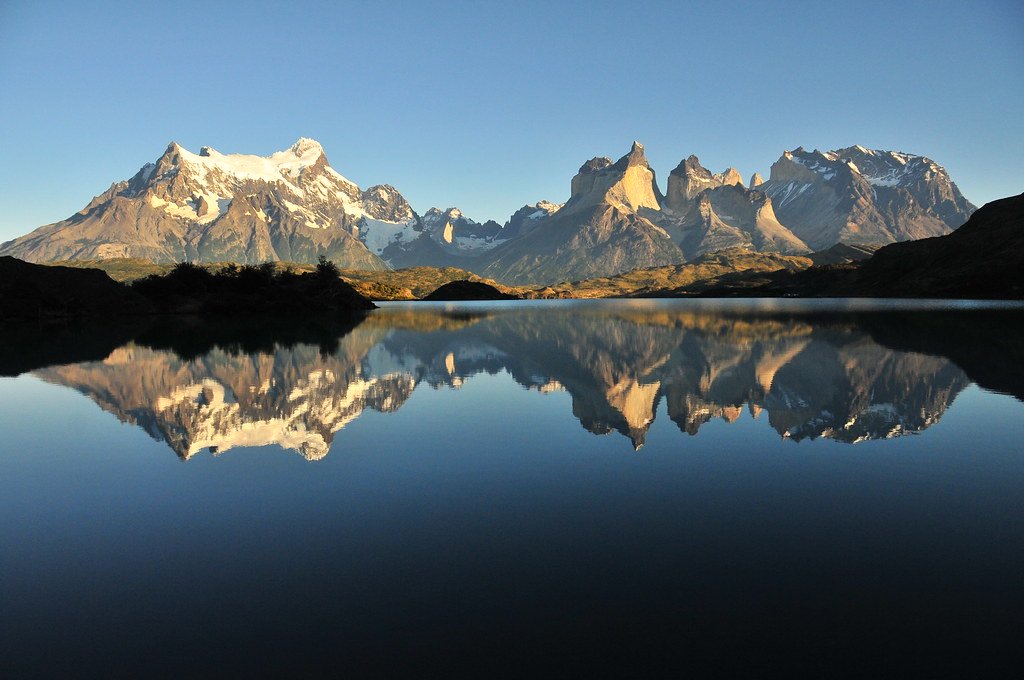
The park’s two classic multi-day routes are the W trek, roughly four to five days, and the O circuit, roughly eight to nine, which adds the remote back side of the massif.
The W takes in the base of the towers, the French Valley and Grey Glacier. It is not technical, but it is long, exposed and often extremely windy. Reasonable fitness and proper wind and rain layers are essential.
Accommodation inside the park must be booked in advance and books out months ahead for the peak season. Refugios and campsites are run by more than one operator, and you generally need to reserve each night separately with the correct operator. Start this early; it is the single biggest planning constraint of the whole trip.
If multi-day hiking is not your thing, the park works well from a base in Puerto Natales or a park hotel, with day trips to the Grey Glacier boat, Lago Nordenskjöld viewpoints and shorter walks.
Book the towns early
Puerto Natales, El Calafate and El Chaltén all have limited beds and a short season:
Perito Moreno
An hour and a half from El Calafate, Perito Moreno is one of the few glaciers in the world that is not in obvious retreat, and it calves spectacularly into the lake.
A network of steel walkways lets you watch from several levels, and most visitors are content with that. Boat trips run close to the face, and mini-trekking tours put crampons on your feet and walk you across the ice; both are booked separately and in advance in high season.
Allow a full day. Bring more layers than you think; the wind coming off the ice is serious.
El Chaltén
El Chaltén is a small village built specifically for hikers, and its great virtue is that every trail starts from the village itself. No transport, no park entrance queue, just walk out of your guesthouse and onto the trail.
Laguna de los Tres is the big one: a long day hike to a glacial lake directly beneath Fitz Roy, with a punishing final climb. Laguna Torre is gentler and points at the needle of Cerro Torre. Loma del Pliegue Tumbado gives you both massifs in one view and sees fewer people.
Keep a spare day. Fitz Roy spends a great deal of its life inside cloud, and the difference between a clear day and a grey one here is enormous.
When to go
The season runs roughly from November to March, the southern summer. December to February is warmest, busiest and windiest. November and March are quieter with slightly more settled air but colder nights and shorter days.
Outside that window many services close, buses reduce drastically and trails can be snowbound.
What to pack
- A genuinely windproof and waterproof shell. This matters more than anything else.
- Layers you can add and shed; all four seasons routinely occur in one afternoon.
- Broken-in boots with ankle support.
- Sun protection. The UV is fierce despite the temperature.
- Cash. Small towns and park refugios do not reliably take cards.
- A refillable bottle; the water from Patagonian streams in these areas is generally drinkable.
Frequently asked questions
Do I need a guide?
Not for the W or the El Chaltén day hikes, which are well marked and busy. Glacier ice-trekking and anything on the southern ice field require a licensed guide.
How far ahead should I book?
For Torres del Paine refugios in high season, several months. For town accommodation, a few weeks to a couple of months. Check current park reservation requirements directly with the official operators before you commit to flights.
Chile or Argentina, if I only have time for one?
Torres del Paine for the multi-day trek and the single most dramatic landscape; El Chaltén if you want day hikes from a village with no logistics.
Is the border crossing difficult?
No, but it is slow, and there are strict rules about carrying fresh food, meat and plant products across. Eat the fruit before the queue.
Pingback: Buenos Aires Itinerary: How to Spend 4 Days in Buenos Aires - Lisa World Travel