
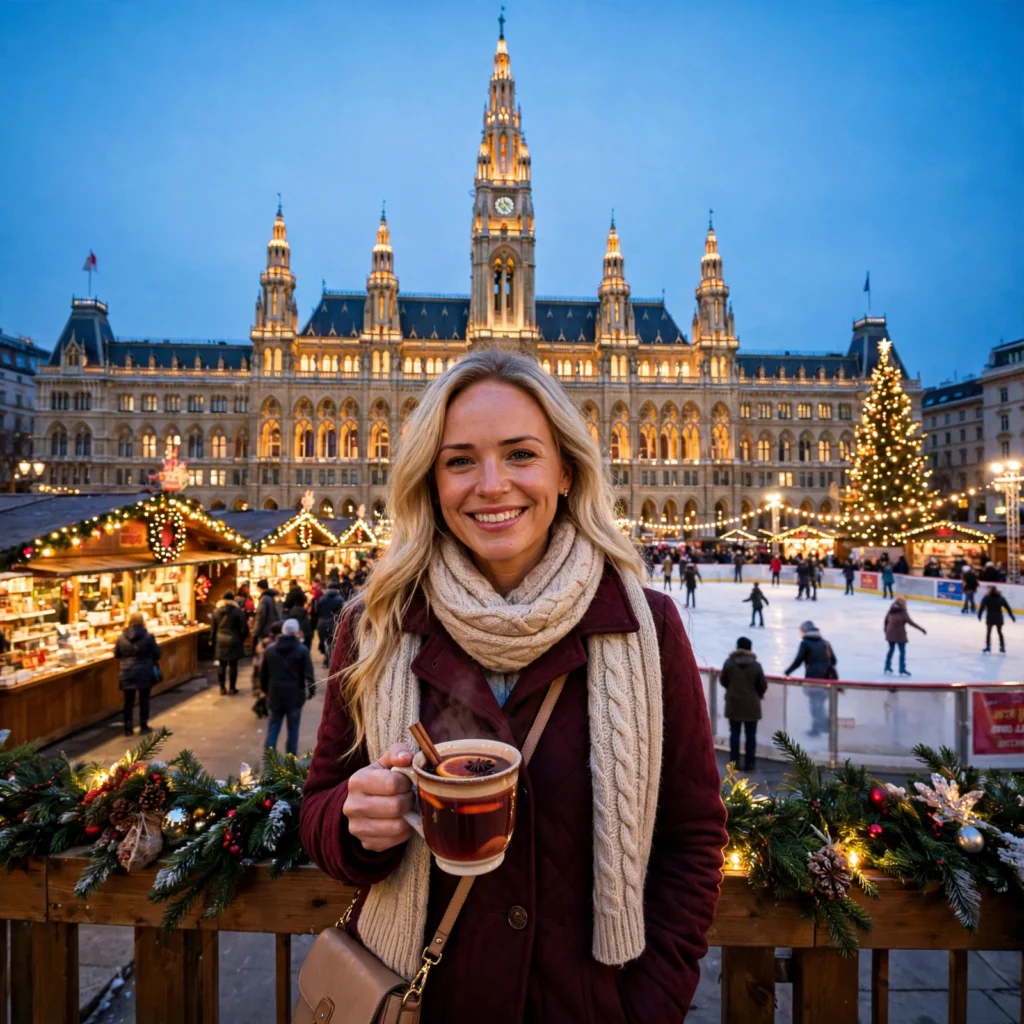
I have a confession: I plan my December trips around food, not sights. This year I set out to eat my way through Europe’s Christmas markets — the ones already open, plus the big ones opening this week — and rank them by what actually ended up in my hands, not by how pretty their Instagram photos are. Spoiler: the prettiest market did not win. The one with the best sausage did not win either. The winner won on a biscuit.
Here is my honest, food-first ranking for 2026, with the dates, the dish to order, and the prices I paid (or, where the market opens this week, the price I’m expecting based on last season). A quick timing note before we start: Vienna, Budapest, Cologne, Colmar and Salzburg are already open as I write this. Strasbourg and Nuremberg open on Friday, November 27, and Prague opens Saturday, November 28 — so for those three, consider this my eating plan as much as my verdict. I’ve tasted what they serve before, and I know exactly what I’m ordering first.
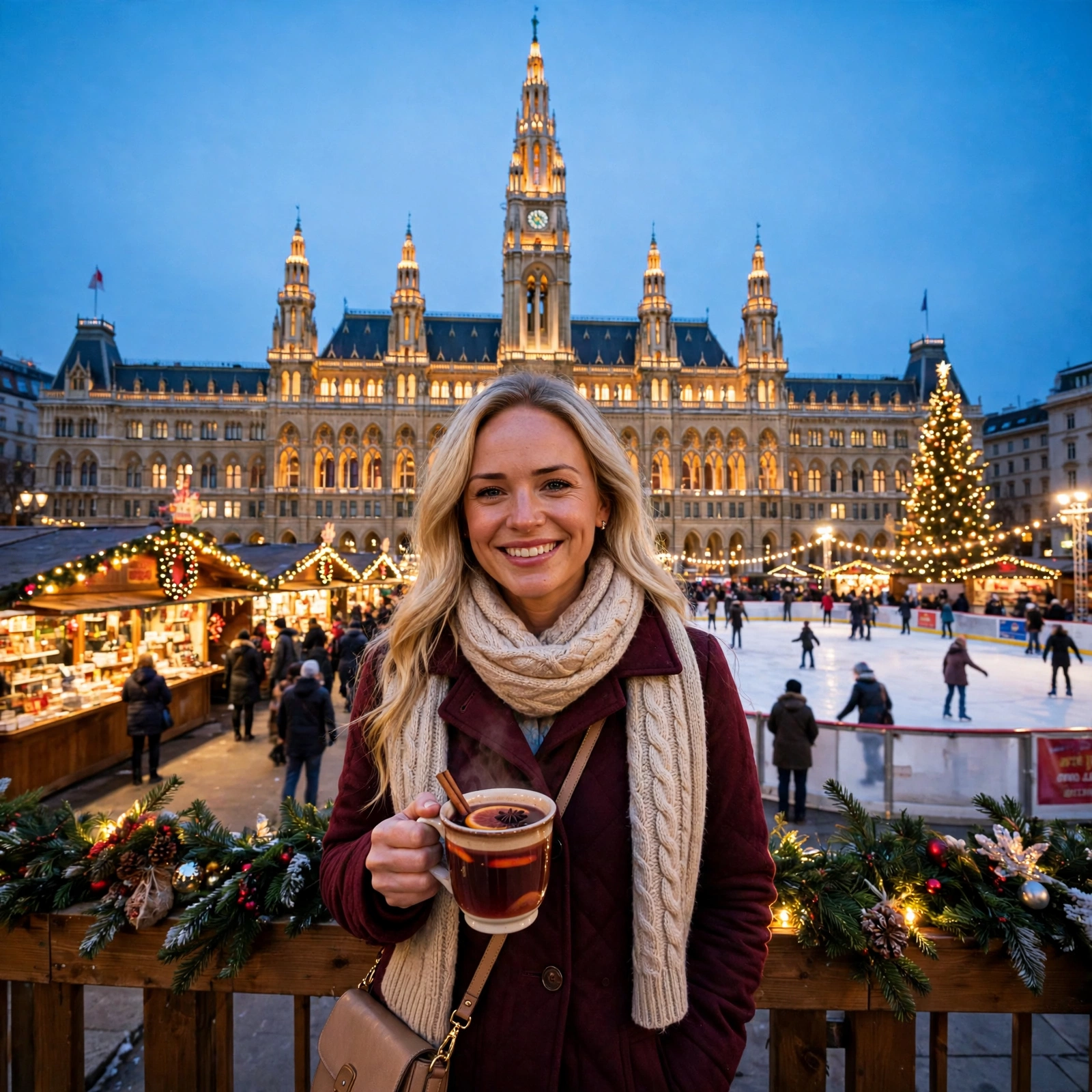
1. Strasbourg, France — the one that wins on a biscuit
When: November 27 – December 24, 2026 (opens 2pm on Friday, November 27; daily 11:30am–9pm; late nights December 11, 12, 18 and 19 until 10pm; closes 6pm on Christmas Eve; nothing open December 25 to New Year)
Where: Christkindelsmärik, Grande Île — the whole old town island becomes the market
Eat this: Bredele biscuits with a vin chaud blanc (white mulled wine)
Strasbourg calls itself the Capital of Christmas and, for once, the nickname is earned. The market sprawls across the Grande Île, the cathedral glows over everything, and the 30-metre tree on Place Kléber towers over the square. But the reason it tops my list is a small, unglamorous biscuit. Bredele are the little spiced Christmas cookies Alsace has been baking for centuries — anise, cinnamon, hazelnut, jam-filled — sold by the bag from stalls that smell like a bakery exploded. I bought one bag “to share” and finished it before I reached the cathedral.
The white vin chaud is the other half of the win. Most markets serve red mulled wine; Strasbourg’s white version, made with local Alsace wine, is lighter, less sweet, and dangerously easy to drink twice. Get it from a stall near the cathedral and drink it looking up at the spire — that’s the postcard moment, and it costs less than a cocktail back home.
One warning: everything here shuts on Christmas Eve at 6pm and stays shut through New Year. If your trip is after Christmas, skip to numbers 5, 6 and 7 on this list.
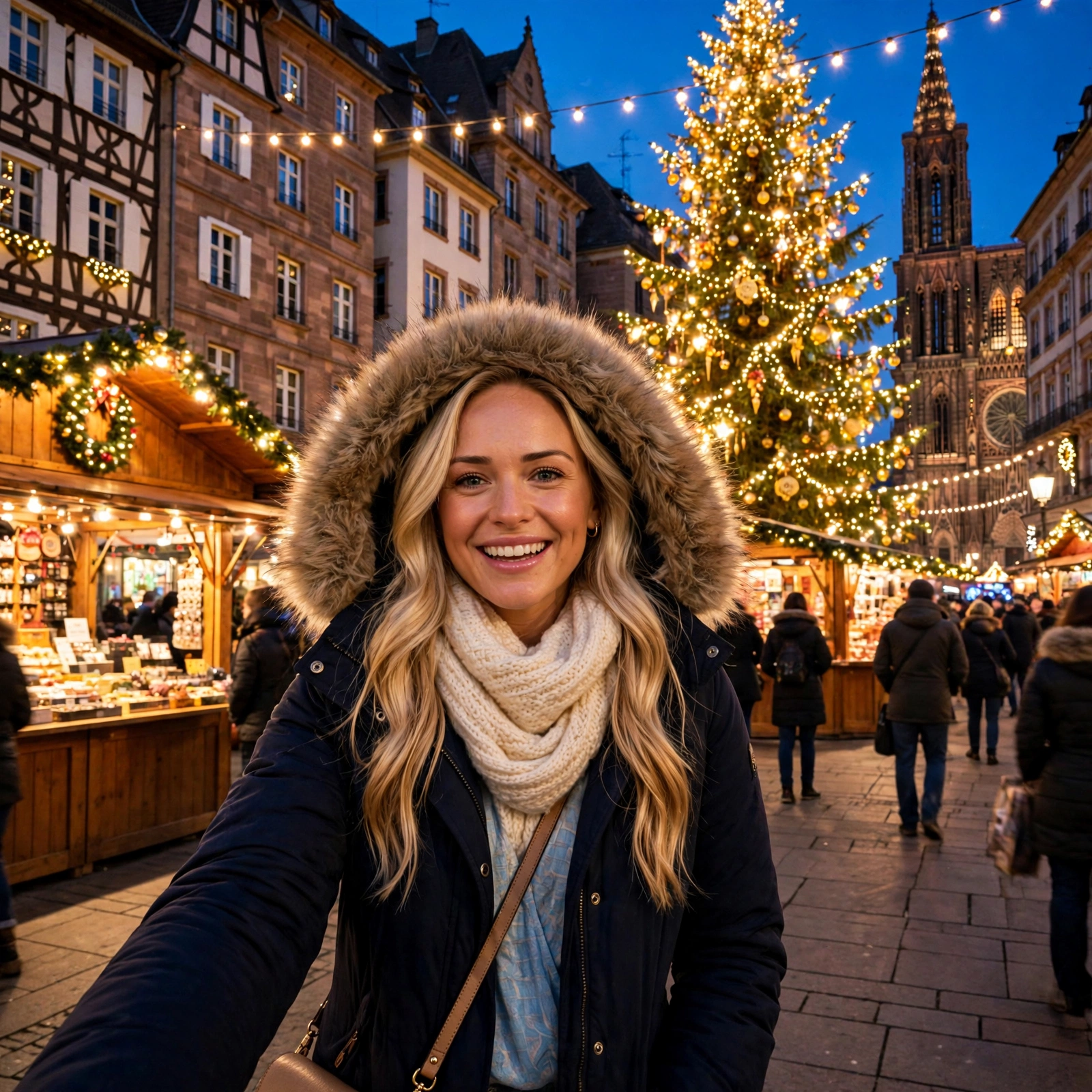
2. Vienna, Austria — the prettiest market that also feeds you properly
When: November 13 – December 26, 2026 (daily 10am–10pm; December 24 until 6:30pm; the ice rink runs to January 6, 2027)
Where: Christkindlmarkt, Rathausplatz — in front of City Hall
Eat this: Käsekrainer (cheese-filled sausage), Kaiserschmarrn (shredded pancake), and a mug of Punsch
Vienna is the market I keep coming back to, because it does the thing most markets only pretend to do: it is beautiful and the food is genuinely good. City Hall lit up behind you, the ice rink to one side, choirs singing from the balcony — and then you bite into a Käsekrainer and cheese runs out of the sausage. It is messy, it is perfect, and it is the single best thing I ate all season.
Save room for Kaiserschmarrn, the torn-up caramelised pancake dusted with icing sugar and served with plum compote. It is a dessert that eats like a meal, which is exactly what you want when it is two degrees and you’ve been walking for hours. And the Punsch here — hot, spiced, rum-spiked — is the drink that makes the cold feel like a choice.
3. Cologne, Germany — the cathedral market that feels like a party
When: November 16 – December 23, 2026 (closed Sunday, November 22; Sun–Wed 11am–9pm, Thu–Fri 11am–10pm, Sat 10am–10pm)
Where: Weihnachtsmarkt am Kölner Dom, Roncalliplatz — right beside the cathedral
Eat this: Glühwein under the twin spires (about €5 last season, plus a €4 refundable mug deposit)
Cologne’s cathedral market is the loudest, warmest market on this list. The Gothic cathedral towers over the square, a canopy of lights stretches over the stalls, and the stage hosts more than 100 free performances across the season. It is the market to come to with friends, not the one for a quiet romantic stroll — and I mean that as a compliment.
The glühwein here is the benchmark I judge all other glühwein against, and it costs about €5, plus a €4 deposit on the mug. Return the mug. You get the deposit back, and the whole system only works if people do. Or keep it as a souvenir and consider the €4 your gift to yourself — just know that’s the deal you’re making.
Heads up on the dates: the market is closed on Sunday, November 22, for Totensonntag, the German day of remembrance. Don’t plan your one Cologne day for that Sunday. And if you arrive between Christmas and New Year, the cathedral market will be gone — but the ice rink at Heumarkt keeps going until January 10.
4. Nuremberg, Germany — the purist, and the best bratwurst in Europe
When: November 27 – December 24, 2026 (opens with the Christkind prologue at 5:30pm on Friday, November 27; around 180 stalls)
Where: Christkindlesmarkt, Hauptmarkt
Eat this: Drei im Weckla — three small bratwurst in a bread roll (about €4.50), plus Elisenlebkuchen (gingerbread)
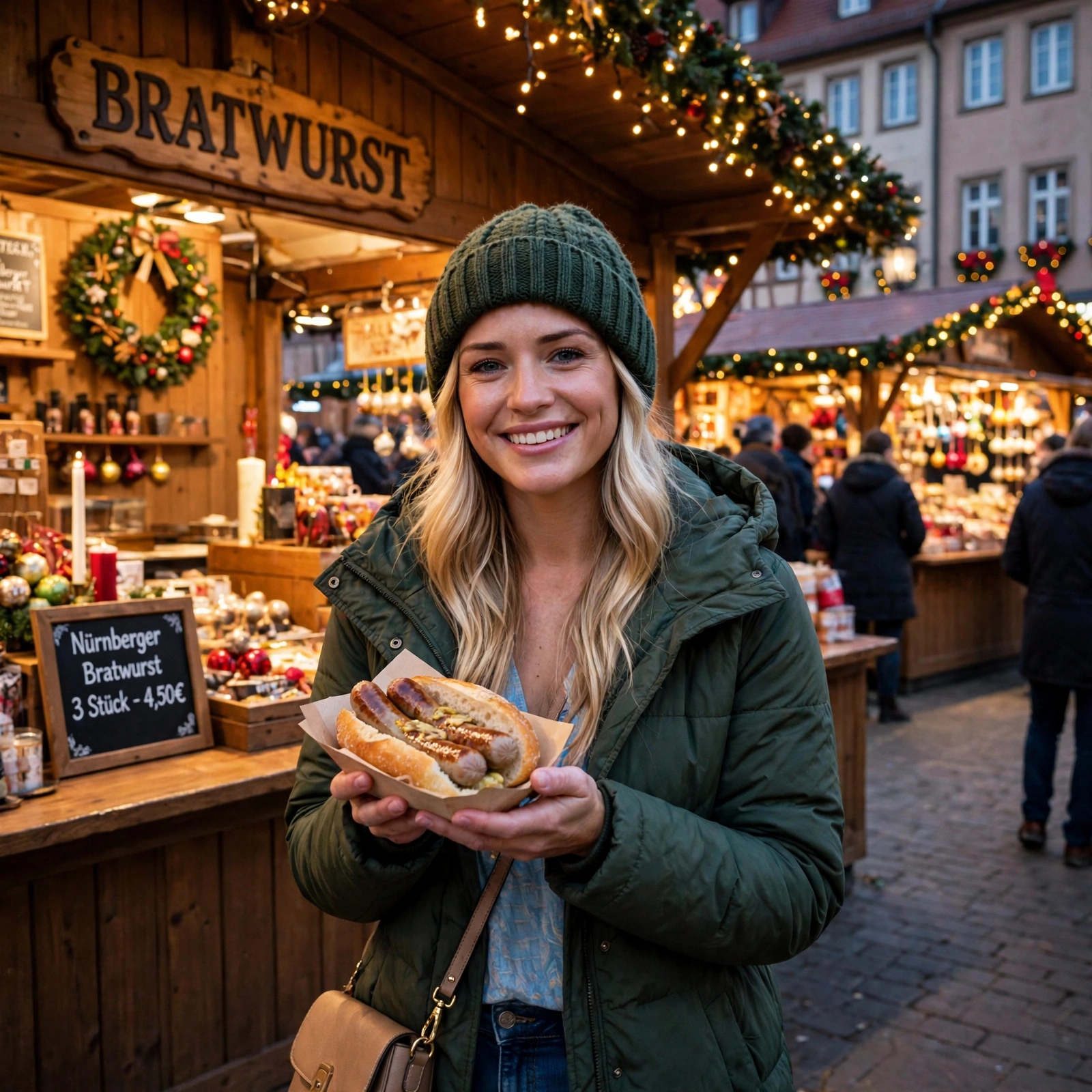
Nuremberg is the strictest market in Europe: the stalls are traditional-only, no plastic tat, no gimmicks. It sounds snobby. It is actually wonderful, because everything you buy here is something someone actually made. And the bratwurst — small, grilled over beechwood, three to a roll with mustard — are the best sausage I have ever eaten at a market. €4.50, eaten standing up, in the cold, with the smell of woodsmoke everywhere. That is the whole experience, and it is enough.
The Elisenlebkuchen is the souvenir to bring home: soft, nutty gingerbread made without flour, the kind that actually tastes like something rather than like sugar and nostalgia. Buy a tin. Your future self, eating it on the plane home, will thank you.
5. Prague, Czechia — the late-season champion
When: November 28, 2026 – January 6, 2027 (daily 10am–10pm; the longest season of the classics)
Where: Old Town Square and Wenceslas Square
Eat this: Trdelník (chimney cake), svařák (mulled wine), medovina (honey wine)
Prague opens on Saturday, November 28, and then simply refuses to close. While Strasbourg, Nuremberg and Cologne all shut their doors by Christmas Eve, Prague’s Old Town Square keeps going all the way to January 6. If you can only travel after Christmas, this is your market — no contest.
The setting does half the work: the tree goes up in front of the Týn Church, the Astronomical Clock ticks away on the Old Town Hall, and the whole square glows. The trdelník — a spiral of dough rolled in sugar and cinnamon, best eaten warm off the spit — is the thing you’ll smell before you see it. And the svařák, Czech mulled wine, runs about 80–120 Kč a mug, which makes Prague one of the cheapest markets on this list once you’re there.
6. Budapest, Hungary — the best value on the list
When: November 13, 2026 – January 1, 2027
Where: Advent Bazilika, St Stephen’s Basilica
Eat this: Kürtőskalács (chimney cake) and lángos (fried flatbread)
Budapest’s Advent Bazilika has been voted Europe’s most beautiful market four years running, and the light show projected onto St Stephen’s Basilica is the reason why. But I ranked it sixth for a reason: the food here is a supporting act, not the star. That said, the supporting act is excellent and cheap. A kürtőskalács — crackly on the outside, soft inside, rolled in cinnamon sugar — costs a fraction of what you’d pay for the equivalent in Vienna, and the lángos, fried flatbread topped with sour cream and cheese (or garlic butter, if you’re feeling brave), is the kind of thing you eat with both hands and no regrets.
Budapest is also the market to pick if you’re travelling between Christmas and New Year and Prague doesn’t tempt you — it’s open until January 1, and the city itself is at its most beautiful in the snow.
7. Colmar, France — the fairytale one (and my budget warning)
When: November 23 – December 29, 2026 (Mon–Thu 11am–7pm, Fri–Sun 10am–8pm; the Gourmet Market runs to January 3, 2027, daily 11am–10pm)
Where: Six markets across the old town
Eat this: Alsatian food at Place Jeanne d’Arc, and the 9-chef Gourmet Market
Colmar is the market that looks like a film set: half-timbered houses, canals, lights everywhere. It’s already open, and its Gourmet Market — nine chefs cooking in one place — is the most ambitious food idea at any European Christmas market this year. So why seventh? Because it’s the priciest and the most crowded of the seven, and the magic wears thin when you’re queuing twenty minutes for a crêpe.
Go anyway — just go on a weekday evening, which is when every market on this list is at its best — and bring cash. Many stalls here don’t take cards, and that’s true at most of these markets, Colmar especially. The Alsatian food at Place Jeanne d’Arc is the quieter, better-value corner of the whole thing.
The ones that almost made it
Salzburg’s market on Dom- and Residenzplatz (November 19 – January 1) deserves a mention: Alpine treats, cathedral choirs, and the most beautiful setting of any market I visited. It just misses the top seven because the food, while lovely, doesn’t have a single dish I’d cross a border for. If you’re doing the Vienna–Salzburg train run, stop anyway — it’s an hour of your life well spent.
My practical tips for eating your way through the markets
- Entry is free almost everywhere. You pay only for what you eat, drink and buy. Budget for food, not tickets.
- Return your mug. Glühwein and Punsch come with a refundable deposit (Pfand) — usually a few euros. Hand the mug back and get your money back.
- Go on weekday evenings. Best atmosphere, shortest queues, and the lights look better after dark anyway.
- Bring cash. Many stalls don’t take cards — Colmar especially.
- Ask about the sausage. Most German and Austrian sausage stalls are pork by default — just ask. Reliably non-pork everywhere: pretzels, roast chestnuts, crêpes and waffles.
- Not drinking? Kinderpunsch is the non-alcoholic mulled drink, and every market has it.
- Travelling after Christmas? Pick Prague (to January 6), Budapest (to January 1) or Colmar’s Gourmet Market (to January 3). The German and French classics shut on December 24.
- Pair them by train. Strasbourg and Colmar are about 30 minutes apart; Prague, Vienna and Budapest link up nicely (Prague–Vienna around 4 hours, Vienna–Budapest around 2.5).
One more thing before you book
If you love the Christmas-lights energy but you’re on the other side of the Atlantic, my Christmas weekend in New York City — the Rockefeller tree, the Fifth Avenue windows, the holiday markets — is the same feeling with a different accent. And if you’re planning a winter trip in general, my 3-day New York itinerary has the cold-weather walking tips I use everywhere, including these markets.
So — which market would you pick first? Are you team bratwurst, team chimney cake, or team “I’ll just eat the biscuits and call it dinner”? Tell me in the comments. I’m genuinely curious, because my ranking is already being argued about in my group chat, and I need backup.