
Some links in this post are booking links. If you book through them we may earn a small commission at no extra cost to you. We only link to services we would use ourselves, and it never changes what we recommend.
Colombia packs an improbable amount into a manageable area: Caribbean colonial cities, Andean coffee farms, a capital at 2,600 metres and a walled old town that looks like a film set because it frequently is one.
Twelve days from Cartagena to the coffee region, with a stop in Medellín, gives you a proper cross-section without endless bus journeys.
Days 1 to 4: Cartagena
Cartagena’s walled city is the postcard: ochre and coral facades, bougainvillea over balconies, horse carriages, and a complete circuit of sixteenth-century walls you can walk at sunset.
Spend a day simply walking the old town and Getsemaní, the formerly working-class barrio just outside the walls that is now the most interesting part of the city, full of street art, small bars and the Plaza de la Trinidad in the evenings.
The Castillo San Felipe fortress deserves a morning, ideally early before the heat. The Palace of the Inquisition is a small, grim, well-presented museum.
Add a day on the water: the Rosario Islands for beaches and clearer sea, or Playa Blanca on the Barú peninsula. Both are day trips by boat, and both are considerably better on a weekday.
Days 5 to 8: Medellín
Medellín sits in a narrow valley at a permanent spring-like temperature, which is why it is called the city of eternal spring. It is also the clearest example anywhere of a city that has remade itself.
Ride the metro and then the Metrocable, the cable car that functions as public transport up the steep hillsides. Comuna 13, once the most dangerous neighbourhood in the city, is now visited for its outdoor escalators and street art; go with a local guide, both for context and because the guiding is a genuine part of the local economy.
Base yourself in El Poblado for restaurants and ease, or Laureles for somewhere more residential and less backpacker-dense.
Take a day trip to Guatapé: a lakeside town of brightly decorated house fronts and El Peñol, a granite monolith with several hundred steps up to a view over a shattered landscape of islands and inlets.
Plan your stops
Internal flights are cheap and save many hours over buses:
Days 9 to 11: The coffee region
The Eje Cafetero, around Salento, Filandia and Manizales, is steep green country planted with coffee and dotted with brightly painted towns and Willys jeeps that serve as local transport.
Stay on a finca, a working coffee farm. Most run tours that walk you through picking, depulping, drying and roasting, and finish with a cup that will genuinely change how you think about coffee.
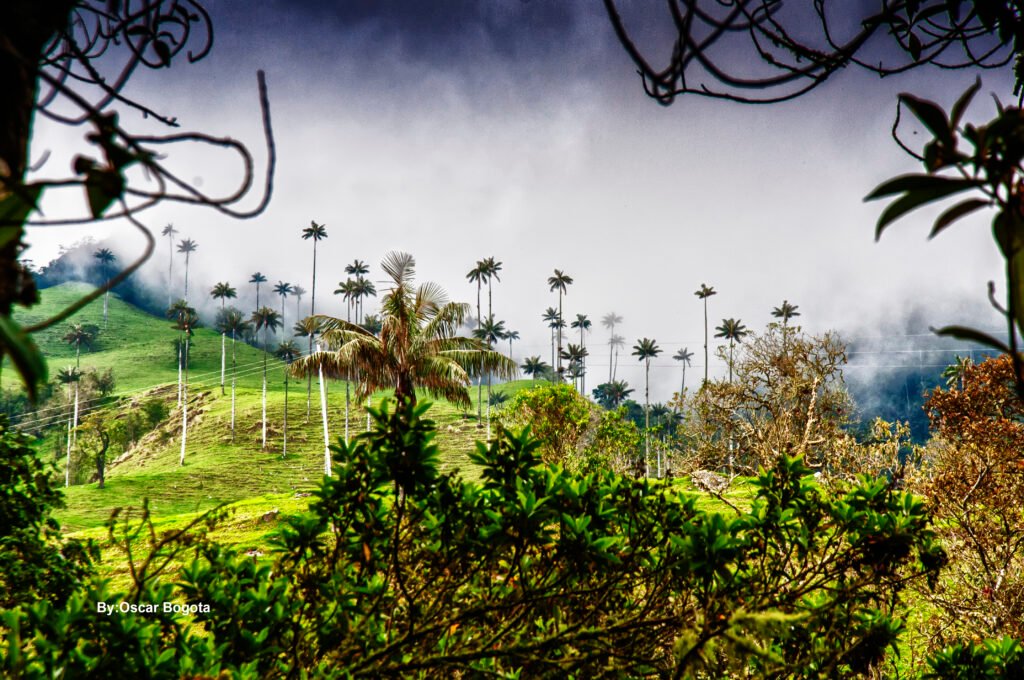
The Cocora Valley is the other reason to come: a cloud-forest valley filled with wax palms sixty metres tall, absurdly out of scale with everything around them. The full loop takes around five to six hours and gets muddy; a shorter out-and-back to the main palm meadow is perfectly satisfying.
Filandia is the quieter, less-visited alternative to Salento and worth an afternoon.
Day 12: Bogotá, or fly out
If you have a final day, Bogotá’s La Candelaria old quarter, the Gold Museum and the Monserrate funicular make a strong closing act. The Gold Museum in particular is world class and often underrated by visitors rushing to the coast.
Note the altitude: Bogotá is high, and arriving there straight from sea level can leave you breathless for a day.
Practical notes
- Fly between regions. Colombia is mountainous and road journeys take far longer than the map suggests.
- Pack for three climates: Caribbean heat, Medellín spring and cool, damp highlands.
- Use registered taxis or ride apps rather than hailing on the street at night.
- Carry small notes. Change for large bills is often scarce.
- Check current government travel advice for specific regions before you go; some parts of the country remain inadvisable while the route above is well travelled.
Frequently asked questions
Is Colombia safe for tourists?
The main tourist route is well established and widely travelled. Petty theft is the realistic risk; take normal city precautions, do not display valuables, and check current official advice for any region you add beyond this itinerary.
Do I need Spanish?
English is limited outside hotels and tour operators. A little Spanish goes a long way and is warmly received.
When is the best time to go?
December to March and July to August are the drier windows in most of the country. The coffee region is green year-round and rain is always possible there.
Could I add the Caribbean coast beyond Cartagena?
Yes. Tayrona National Park and Minca near Santa Marta are a natural extension and add roughly three to four days.
Pingback: Where to Stay in Cartagena: Best Areas for Every Type of Trip - Lisa World Travel
Pingback: South America on a Budget: What a Trip Really Costs - Lisa World Travel