
Some links in this post are booking links. If you book through them we may earn a small commission at no extra cost to you. We only link to services we would use ourselves, and it never changes what we recommend.
Cartagena is small enough to walk across in an hour, which makes the choice of neighbourhood less about logistics and more about what kind of trip you want: colonial grandeur, scruffy creative energy, high-rise beach, or somewhere quieter entirely.
Here are the four realistic options and who each one suits.
The walled city, or Centro Histórico
Best for: first-time visitors, romance, short stays.
Inside the walls you get the Cartagena of the photographs: balconies dripping with flowers, cobbled lanes, plazas that fill with musicians in the evening, and the wall walk itself for sunset.
Accommodation is largely converted colonial houses turned into boutique hotels, many with courtyards and plunge pools. It is the most expensive part of the city and worth it if your trip is short, because everything is on your doorstep.
The trade-off: street noise, persistent vendors in the busier plazas, and a slightly curated feel. Rooms facing an inner courtyard rather than the street are noticeably quieter.
Getsemaní
Best for: younger travellers, longer stays, better value, nightlife.
Just outside the walls and a ten-minute walk from the centre, Getsemaní was a working-class barrio and is now the most characterful part of the city. Umbrella-strung lanes, murals on almost every wall, small bars, street food, and the Plaza de la Trinidad where the whole neighbourhood gathers after dark.
You will find hostels, guesthouses and an increasing number of design-led small hotels, generally at meaningfully lower prices than inside the walls.
The trade-off: it is genuinely lively at night, which is the point, but light sleepers should ask about the location relative to the plaza. Gentrification is also visible and fast; support the long-standing local businesses where you can.
Compare by neighbourhood
Prices vary sharply between these areas, so it is worth checking all of them:
Bocagrande
Best for: families, beach access, larger hotel rooms, pools.
Bocagrande is the thin peninsula of high-rise hotels and apartment blocks south of the old city, with a long city beach and a much more modern, Miami-adjacent feel.
It suits families and anyone who wants a full-service resort-style hotel, a proper pool and a supermarket nearby. Taxis to the walled city take a few minutes.
The trade-off: almost no colonial charm, and the city beach here is grey-sand and busy rather than the Caribbean postcard. For that, take a boat to the Rosario Islands for the day.
Manga and the quieter edges
Best for: longer stays, apartment rentals, a more residential experience.
Manga is a leafy island neighbourhood of older mansions and apartment buildings, close to the centre but largely free of tourism. Good for anyone staying a week or more and wanting to cook, shop locally and have a quieter base.
The trade-off: fewer restaurants aimed at visitors and a short taxi to almost everything.
How long to stay where
- Two nights: the walled city, without hesitation.
- Three to four nights: Getsemaní, with a day on the islands.
- A week with children: Bocagrande, with day trips into the old town.
- Split stay: two nights inside the walls for the atmosphere, then move to Getsemaní. It is a ten-minute walk, so the move costs you nothing.
Booking tips
- Air conditioning is not optional. Cartagena is hot and humid year-round; confirm the room has it and that it is quiet.
- Ask about the courtyard. Colonial conversions vary enormously between serene and echoing.
- High season runs around December to January and over Easter, when prices roughly double and the old town books out.
- Check the walk to the walls on a map rather than trusting a listing’s description of “central”.
Frequently asked questions
Is Getsemaní safe at night?
The main streets and the plaza are busy and generally fine. As anywhere, keep to lit streets, watch your phone, and take a registered taxi or ride app late at night.
Can I swim in Cartagena itself?
You can at Bocagrande, but the water is not the clear turquoise most people picture. The Rosario Islands or Barú are the day trips worth making for that.
Do I need a car?
No. The old town is walkable and taxis or ride apps cover everything else cheaply.
How many nights is enough?
Three to four covers the old town, Getsemaní, the fortress and a day on the water without rushing.
What a Cartagena hotel room is actually like
Colonial conversions are beautiful and idiosyncratic. Rooms are often built into spaces that were never designed as bedrooms, which means wildly varying sizes, occasional windowless interiors and staircases that a large suitcase will not enjoy.
Pools are usually plunge pools rather than swimming pools, sized for cooling off rather than lengths. Rooftop terraces are the real amenity worth paying for, both for the breeze and for the view over the tiled roofs at dusk.
Breakfast is frequently included and frequently excellent: arepas, fresh tropical fruit and good Colombian coffee. In Getsemaní, hostels and guesthouses often serve it on a shared terrace, which is a genuinely sociable way to start the day.
Read recent reviews specifically for mentions of noise and air conditioning. Those two factors determine whether you sleep, and they vary far more between rooms in the same property than the listing photographs suggest.
Getting between neighbourhoods
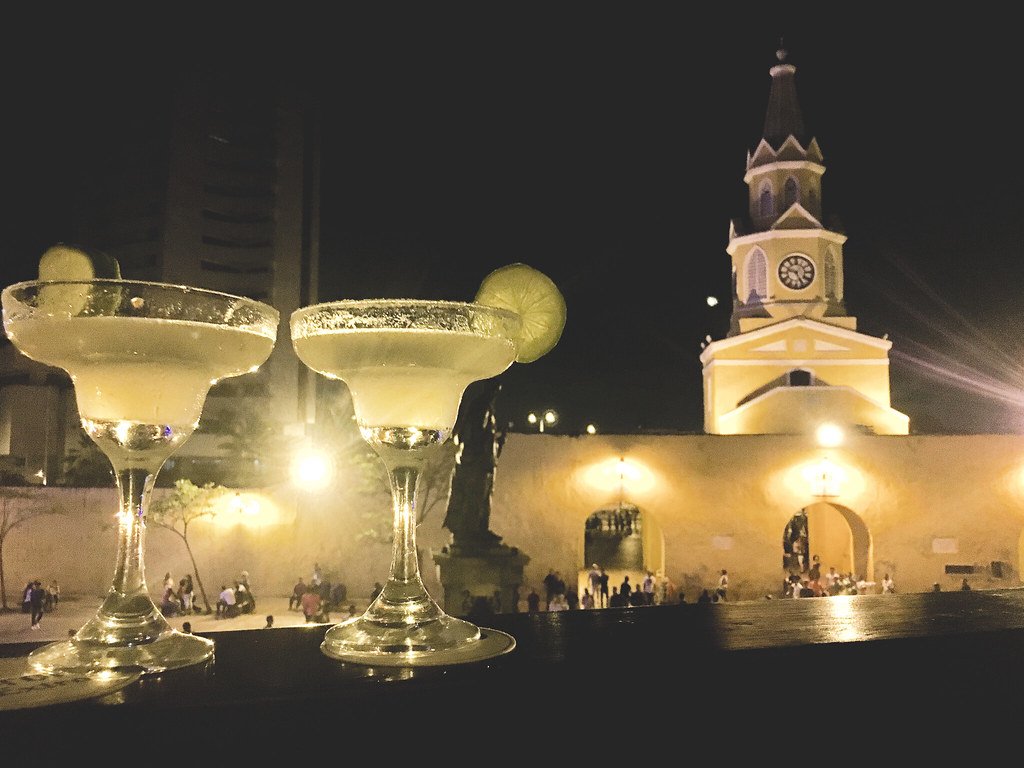
The old town to Getsemaní is a genuine ten-minute walk through the Puerta del Reloj and across the park. No transport needed.
Bocagrande to the old town is roughly ten to fifteen minutes by taxi depending on traffic, which builds up considerably in the late afternoon. Walking it is possible along the waterfront but hot and less pleasant than it sounds.
From the airport, a taxi to any of these areas takes around fifteen to twenty-five minutes. Agree the fare before setting off or use a ride app, and note that the arrivals area has an official taxi desk if you prefer a fixed price.