
Some links in this post are booking links. If you book through them we may earn a small commission at no extra cost to you. We only link to services we would use ourselves, and it never changes what we recommend.
Oahu is the most misunderstood of the Hawaiian islands. People arrive expecting either a high-rise resort strip or a tropical idyll, and it is emphatically both, separated by about an hour of driving.
Choosing where to base yourself here matters more than on any other island, because the difference between Waikiki and the North Shore is not a matter of degree. They are different holidays.
Waikiki: convenient, busy, better than its reputation
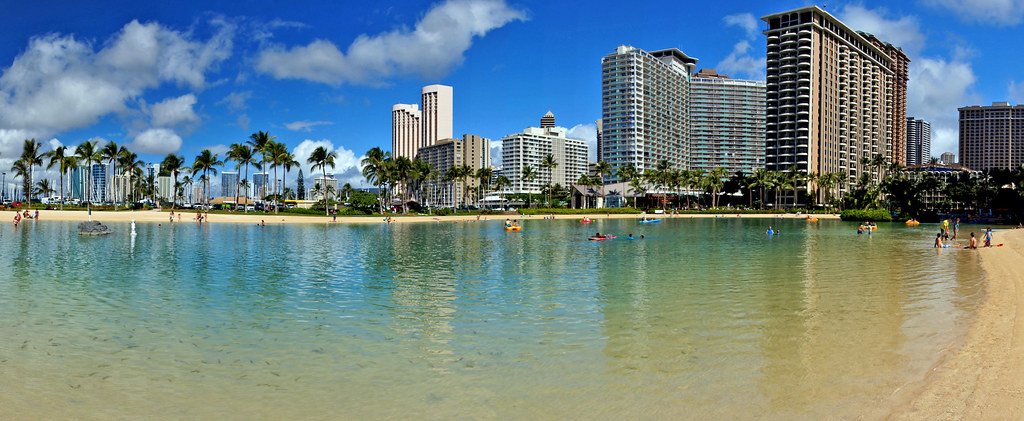
Waikiki is dense, walkable and full of hotels, restaurants and shops. It has a genuinely good beach with gentle water, an excellent beginner surf break, and Diamond Head at the end of it.
People sniff at it, and then discover it is the only part of the island where you can manage without a car, eat somewhere different every night and walk home. For a first visit, or a short one, that convenience is worth a great deal.
The trade-offs are real: it is crowded, the beach is busy, resort fees and paid parking are common, and it feels a long way from the Hawaii of the brochures.
Best for: first-timers, short trips, travellers without a car, nightlife and shopping.
The North Shore: the Hawaii you pictured
Haleiwa and the beaches around it are low-rise, laid-back and beautiful, with food trucks, shave ice and the famous winter surf breaks at Pipeline and Waimea.
The seasonal split here is critical. In summer, the North Shore is calm and swimmable. In winter, the same beaches produce enormous, genuinely dangerous surf, and swimming is often impossible. If you are picturing gentle turquoise water in January, you are picturing the wrong coast.
Accommodation is limited and skews towards holiday rentals. You will need a car, and dining options thin out quickly after dark.
Best for: surfers, repeat visitors, anyone wanting quiet, and summer beach days.
Compare the areas
Watch for compulsory resort fees and parking charges, which are common in Waikiki and change the real nightly price:
Ko Olina: the resort bubble
On the dry, sunny west side, Ko Olina is built around four sheltered man-made lagoons with calm, protected water. That makes it the single best area on the island for young children.
It is also self-contained to the point of isolation. There is very little outside the resorts, dining is resort-priced, and Honolulu is a real drive away, considerably longer in rush hour traffic, which on Oahu is heavy.
Best for: families with small children, golf, and anyone whose plan is to stay put.
Kailua and the windward coast
Kailua and Lanikai have arguably the best beaches on the island: soft sand, turquoise water and the Mokulua islands offshore. The area is residential and pleasant, with a proper town behind the beach.
Hotels barely exist here. Stock is holiday rentals, and Honolulu has tightened short-term rental rules considerably in recent years, so verify that anything you book is legally permitted before paying. Parking at Lanikai is restricted and heavily enforced.
Best for: beach-focused trips, kayaking, travellers who want residential calm with good swimming.
Splitting your stay
For a week or longer, the strongest approach is usually a few nights in Waikiki for Pearl Harbor, Diamond Head and the city, then a few on the North Shore or windward coast for the beaches.
Oahu is small enough that this is easy, and it gives you both versions of the island without a compromise base that delivers neither.
Getting around from each base
Oahu has genuine public transport, which is unusual in Hawaii, and it changes the calculation on whether to hire a car.
TheBus covers the island extensively and cheaply, including a route to the North Shore, and the Skyline rail system is being extended in phases across the south of the island. From Waikiki, you can reach a great deal without driving. From anywhere else, the bus works but eats hours.
Two practical warnings for drivers. Traffic in and out of Honolulu at peak times is heavy and persistent, so a base on the west side means sitting in it twice a day. And parking is a real cost: many Waikiki hotels charge a nightly fee on top of an already compulsory resort fee, which can add up to more than people budget for across a week.
If you are staying in Waikiki and plan only two or three excursions, hiring a car for just those days is frequently cheaper than keeping one parked all week.
Matching the area to your trip
- First visit, one week: Waikiki, with a car for two or three days.
- Young children: Ko Olina for the lagoons, or Waikiki for the calm beach and easy food.
- Teenagers and surfers: North Shore in summer, Waikiki in winter.
- Second or third visit: Kailua or the North Shore, with a car throughout.
- Short stopover: Waikiki, without question. Anything else wastes the time you have.
- Winter beach holiday: south or west coast, because the north is unswimmable.
Frequently asked questions
Do I need a car in Oahu?
Not if you stay in Waikiki and use the bus and tours. Anywhere else, yes. Note that hotel parking in Waikiki is expensive and often charged nightly on top of the room.
Is Waikiki too touristy?
It is unapologetically a resort district. Whether that disqualifies it depends on what you want; plenty of people use it as a convenient base and spend their days elsewhere on the island.
Which side is best for swimming in winter?
The south and west, including Waikiki and Ko Olina. North Shore surf in winter is for watching, not swimming, and the lifeguards’ warnings should be taken literally.
Do I need to book Pearl Harbor in advance?
The USS Arizona Memorial programme uses timed reservations that are released in advance and go quickly. Book as soon as your dates are fixed, and check the current system, which has changed several times.
Pingback: Maui Itinerary: How to Spend 7 Days in Maui - Lisa World Travel