
Some links in this post are booking links. If you book through them we may earn a small commission at no extra cost to you. We only link to services we would use ourselves, and it never changes what we recommend.
Banff is the rare mountain destination where the postcard views are genuinely accessible. You do not need to be a mountaineer to stand beside Moraine Lake or ride a gondola above the treeline. What you do need is a plan, because the park’s most famous places now operate on shuttle systems and timed access that catch unprepared visitors out.
This five-day itinerary covers Banff, Lake Louise and a stretch of the Icefields Parkway, with the logistics that actually matter.
Read this before you plan anything
Three things shape every Banff itinerary, and all three have changed in recent years:
- A park pass is required for every vehicle, bought in advance or at the gate.
- Moraine Lake is closed to private vehicles. Access is by park shuttle, commercial bus or guided tour only, and these book out well ahead in summer. This is the single biggest planning trap.
- Lake Louise parking fills extremely early in peak season and is paid. The shuttle from the park-and-ride is usually the saner option.
Shuttle systems and reservation windows are revised most years, so check the official Parks Canada site when you book rather than relying on any guide, including this one.
Day 1: Banff town and Sulphur Mountain
Arrive, collect a car if you are driving, and keep the first day gentle. Banff Avenue is touristy but pleasant, and the Bow River walk to Bow Falls takes an easy hour.
In the afternoon, take the Banff Gondola up Sulphur Mountain. The boardwalk along the ridge at the top gives you a full panorama of the valley and is the best orientation you can get on day one. Alternatively, walk up the switchback trail and ride down, which is free in one direction and hard work.
Finish in the Banff Upper Hot Springs, which is exactly as good after a long travel day as it sounds.
Day 2: Lake Louise and Moraine Lake
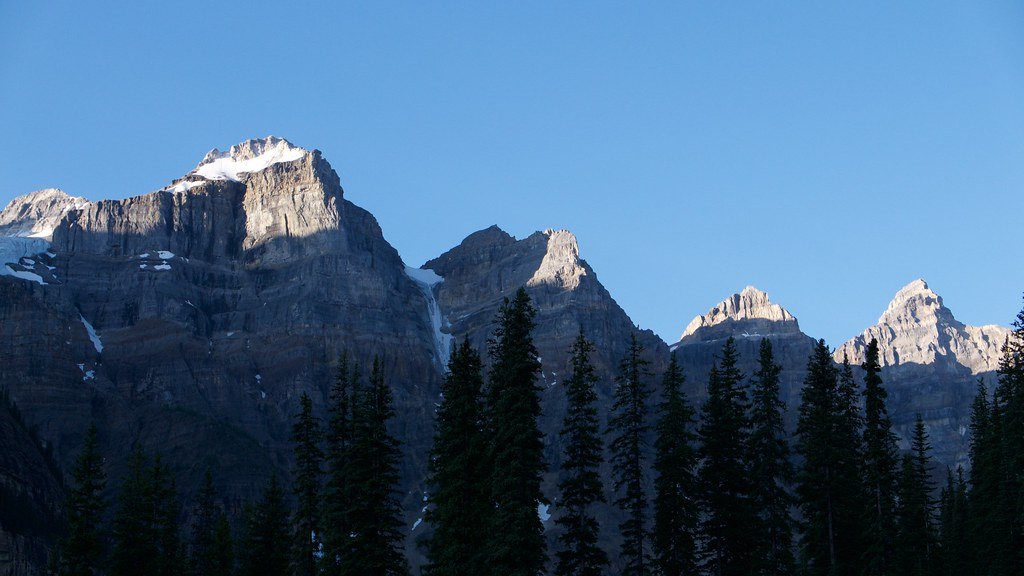
The big day, and the one to book in advance. If you can face it, an early shuttle to Moraine Lake for sunrise is the standout experience of most people’s trip: the Rockpile viewpoint, the ten peaks behind the lake, and considerably fewer people than mid-morning.
Then move to Lake Louise. The lakeshore stroll is flat and short. For something better, walk up to the Lake Agnes Tea House, a steady climb of a couple of hours return, or continue to the Plain of Six Glaciers for a longer day with fewer crowds.
Canoes are available on both lakes and are memorably expensive. Whether that is worth it is a personal question, but the photograph is undeniably good.
Where to base yourself
Banff town has the most choice, Lake Louise puts you at the trailheads, and Canmore is usually better value just outside the park gate:
Day 3: The Icefields Parkway
One of the great drives anywhere. The full route to Jasper takes around three hours without stopping, which nobody does. A comfortable day is to drive as far as the Columbia Icefield and return, or to continue to Jasper and stay overnight if your itinerary allows.
Stops worth making: Bow Lake, Peyto Lake for the wolf-head shape from the viewpoint, the Mistaya Canyon walk, and the Athabasca Glacier. Weeping Wall is worth a pause in spring.
There is no fuel for a long stretch of the parkway and mobile coverage is patchy to nonexistent. Fill up before you leave and download your maps offline.
Day 4: Johnston Canyon and the Bow Valley Parkway
Johnston Canyon’s catwalks bolted to the rock lead to the Lower and Upper Falls, and it is deservedly popular, which means going early or late. The Ink Pots beyond the falls thin the crowds dramatically for an extra hour of walking.
Drive the Bow Valley Parkway rather than the highway. It is slower, prettier and the best wildlife-spotting road in the park. Note that sections close seasonally to protect wildlife, including a spring and autumn evening closure, so check before setting out.
In the afternoon, Vermilion Lakes at sunset gives you Mount Rundle reflected in still water, five minutes from town.
Day 5: A hike, or Yoho
Either take a proper hike, with Sunshine Meadows and Healy Pass both outstanding in wildflower season, or cross into British Columbia for Yoho National Park.
Yoho is under an hour away and holds Emerald Lake, the Natural Bridge and Takakkaw Falls, one of the highest waterfalls in Canada. It is quieter than Banff for very little extra effort, and it makes an excellent final day.
Wildlife, sensibly
You are in bear country. Carry bear spray on trails and know how to use it, make noise on blind corners, never approach or feed any animal, and stay in your vehicle if you stop for wildlife on the road. Elk are responsible for more injuries than bears, particularly in autumn rut and spring calving, so give them a very wide berth in town as well as out of it.
Frequently asked questions
Do I need a car?
It helps enormously, particularly for the Icefields Parkway. It is possible to visit without one using the regional bus from Calgary and the in-park shuttles, but your flexibility drops sharply.
How far is Banff from Calgary?
Roughly a ninety-minute to two-hour drive on a good day, and Calgary is the usual arrival airport. Allow more in winter conditions.
Can I see Moraine Lake without booking?
Not in a private vehicle. You need a shuttle, tour or commercial bus seat, and in peak season these sell out. Book it as soon as your dates are fixed, because it is the one thing that cannot be improvised.
Is five days enough?
Yes for the highlights at a reasonable pace. Seven lets you add Jasper properly rather than glimpsing it from the end of a long drive.
Pingback: Maui Itinerary: How to Spend 7 Days in Maui - Lisa World Travel
Pingback: Best Time to Visit Banff: A Month-by-Month Guide - Lisa World Travel