
Some links in this post are booking links. If you book through them we may earn a small commission at no extra cost to you. We only link to services we would use ourselves, and it never changes what we recommend.
Zanzibar is usually sold as a beach add-on to a Tanzanian safari, which undersells it. The island has a thousand years of Indian Ocean trading history layered into a UNESCO-listed old town, a spice-growing interior, and beaches that genuinely look like the photographs. Seven days is enough to give each of those a proper run rather than spending a week on one sun lounger.
The structure that works best is a split: two nights in Stone Town at the start, then four or five nights on a beach, chosen according to what you actually want from the sea.
Days 1 and 2: Stone Town
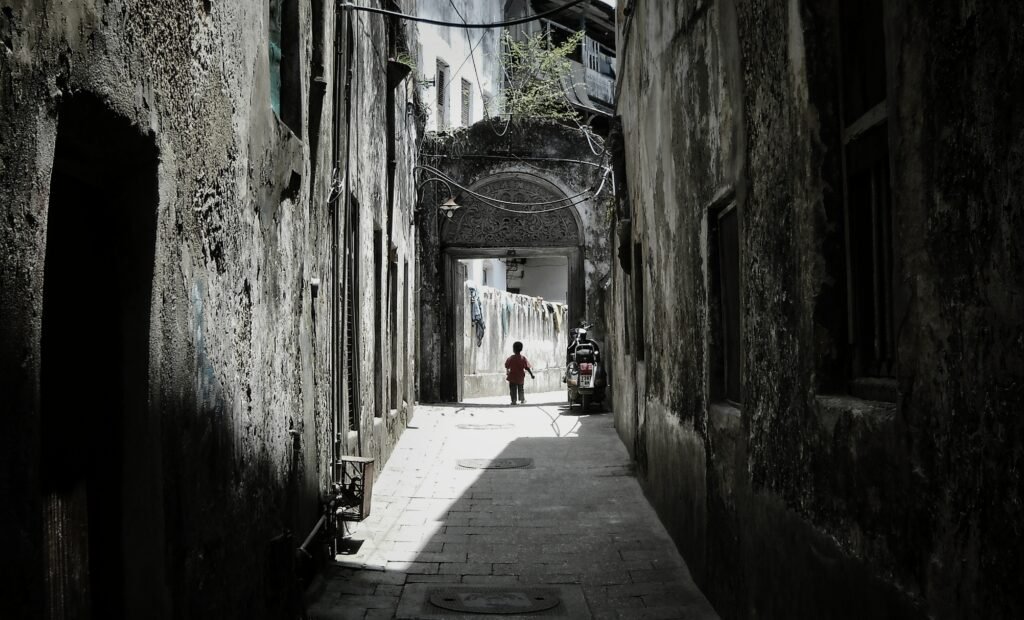
Stone Town is a warren of coral-stone buildings, carved doors and lanes too narrow for cars. It is small enough to cross in twenty minutes and confusing enough that you will not.
Spend the first afternoon walking without a plan. The landmarks worth finding are the Old Fort, the House of Wonders, the former slave market site with its memorial and Anglican cathedral, and the Darajani Market. The famous carved doors are everywhere once you start noticing them, and the difference between the Indian and Omani styles becomes obvious quickly.
In the evening, the Forodhani Gardens night market sets up along the seafront with grilled seafood and Zanzibar pizza, which is a folded stuffed pancake and nothing like pizza. Prices are quoted before you order if you ask, and asking is advisable.
Day two is for a spice farm tour in the interior, which is far more interesting than it sounds, and for the short boat trip to Prison Island, where a colony of introduced Aldabra giant tortoises lives, some of them well over a century old.
Choosing your beach
This is the decision that determines your week, and it hinges on tides. On the east coast the tidal range is dramatic: at low tide the sea retreats several hundred metres and swimming from the beach is not possible for part of every day. Villagers harvest seaweed on the flats, which is genuinely lovely to watch, but it is not what people expect when they book a beach holiday.
- Nungwi and Kendwa, north. The least tidal beaches on the island, so you can swim all day. Busiest, most developed, best sunsets and the liveliest nightlife. Kendwa is slightly calmer than Nungwi.
- Paje and Jambiani, south-east. Long, wide, windswept beaches and the kitesurfing centre of the island. Strong tides. Younger, more laid-back, better value.
- Matemwe, north-east. Quiet, traditional, with a reef offshore and easy access to Mnemba Atoll for snorkelling and diving. Tidal.
- Michamvi and the Kae peninsula, east. Sheltered, upmarket and quiet, with sunset on the west-facing side, which is unusual for the east coast.
If this is your only beach week of the year and you want to swim whenever you like, go north. If you want atmosphere, space and value, go south-east and plan around the tide chart.
Days 3 to 6: Beach time, with three things worth leaving for
Four days on the coast is enough to be properly idle and still do the following.
Mnemba Atoll
The best snorkelling and diving accessible from the island, off the north-east coast. Reef fish, turtles and, seasonally, dolphins. Go early in the morning before the boat traffic builds. Choose an operator that keeps a respectful distance from dolphins rather than chasing them; the chasing boats are common and best avoided.
Jozani Forest
The island’s remaining patch of native forest and the only place to see the Zanzibar red colobus, a monkey found nowhere else on earth. It takes a couple of hours and includes a mangrove boardwalk. Easy to combine with a transfer between Stone Town and the east coast.
The Rock and Kuza Cave
The Rock is the restaurant on a tidal outcrop that appears in every Zanzibar photo set. It is touristy, the food is fine rather than exceptional, and it is still a good hour. Book ahead. Nearby, Kuza Cave is a freshwater limestone swimming hole and a genuinely refreshing stop.
Day 7: A slow finish
Keep the last day loose. A sunset dhow cruise from Stone Town is the classic ending, and the traditional wooden boats with their lateen sails are the most photogenic thing on the water. If you are flying out late, the airport is close to Stone Town, which makes a final morning in the old town easy.
When to go
The dry seasons are the reliable windows: June to October and December to February. The long rains fall roughly March to May, when many smaller beach properties close entirely. The short rains around November are lighter and usually fall in bursts rather than all day.
June to October pairs naturally with the Serengeti dry season, which is why the safari-then-beach combination is so common.
Practical notes
Zanzibar is a predominantly Muslim island. Beachwear is entirely normal at the resorts and on the beach, but covering shoulders and knees in Stone Town and in villages is expected and appreciated. During Ramadan, be discreet about eating and drinking in public during daylight.
Carry cash. Card acceptance outside larger hotels is patchy and ATMs are concentrated in Stone Town. Tap water is not drinkable.
Health requirements, including yellow fever certification depending on your route, and current visa rules should be confirmed with official sources well before you travel. Malaria precautions are standard advice for the island; speak to a travel clinic.
Frequently asked questions
Is a week too long for Zanzibar?
No, provided you split it between Stone Town and a beach. Seven days on one beach with no excursions would be a lot for most people; seven days with the town, the forest, the reef and the coast is well paced.
Which beach has the best swimming?
Nungwi and Kendwa in the north, because the tidal range there is much smaller. The east coast beaches are more beautiful at some states of the tide and unswimmable at others.
Can I combine Zanzibar with a safari?
Yes, and it is the most popular way to do it. Short flights connect Zanzibar with Arusha and the northern safari circuit, so a week of safari followed by a week on the coast is a straightforward two-week trip.
Is Zanzibar expensive?
It spans the full range. Beachfront resorts in the north in high season are priced internationally, while guesthouses in Paje or Jambiani are very affordable. Food and local transport are cheap; imported goods and organised excursions are not.
Do I need to worry about the tides?
On the east and south-east coasts, yes, and it is the single most common complaint from travellers who did not research it. Check a tide chart before booking and, if daytime swimming matters to you, choose the north.
Pingback: Tanzania Safari Guide: Serengeti, Ngorongoro and When to Go - Lisa World Travel