
Some links in this post are booking links. If you book through them we may earn a small commission at no extra cost to you. We only link to services we would use ourselves, and it never changes what we recommend.
Vojvodina, the flat northern province of Serbia, feels like a different country from the hills to the south. It was Habsburg territory for centuries, and it shows: pastel baroque facades, Hungarian and Slovak spoken alongside Serbian, and a slower, more Central European rhythm.
Novi Sad is its capital, and a weekend there plus the monastery-dotted ridge of Fruška Gora is one of the best short trips in the Balkans.
Getting there
Novi Sad is around an hour and a half from Belgrade by bus, and considerably faster on the modern high-speed rail link, which is one of the genuine pleasures of travelling in Serbia.
The city itself is compact and entirely walkable. You only need a car for Fruška Gora, and even then a guided wine or monastery tour from Novi Sad is a reasonable alternative.
Day 1: Novi Sad
Begin at Trg Slobode, the main square, framed by the neo-Gothic Church of the Name of Mary and the city hall. The pedestrian streets running off it, Zmaj Jovina and Dunavska, are the heart of the old town.
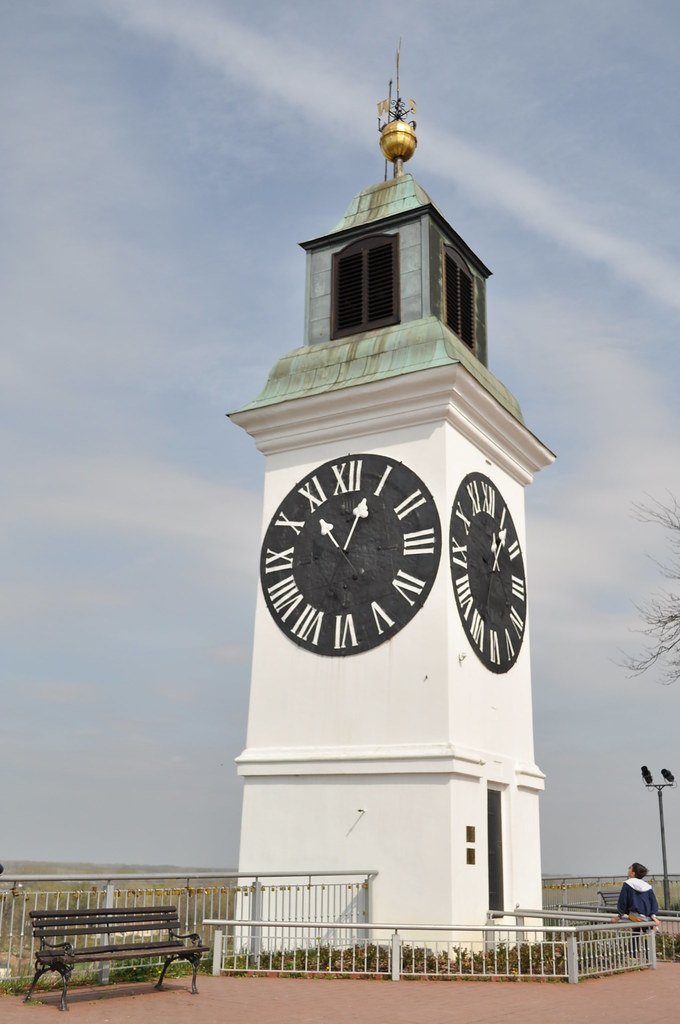
Walk down to the Danube Park and the riverside, then cross the bridge to Petrovaradin Fortress, an enormous eighteenth-century Habsburg fortification on a cliff above the river. Its clock tower has the hands reversed, the large one marking hours so that boatmen on the Danube could read it from a distance.
Beneath the fortress lies a network of underground military tunnels running for kilometres, visitable on a guided tour. Above it, the terrace is the classic view over the city and the river, and the site of the EXIT festival each July.
In the evening, eat in the old town. Vojvodina’s food leans Hungarian: paprika, goulash, freshwater fish stew and heavy, excellent bread.
Where to stay
The old town is small and central; the wine villages are a quieter alternative:
Day 2: Sremski Karlovci and Fruška Gora
Sremski Karlovci, twenty minutes from Novi Sad, is a small baroque town of improbable elegance for its size: a cathedral, the first Serbian grammar school, a patriarchal palace and the Chapel of Peace where a treaty between the Habsburgs and the Ottomans was signed.
It is also the centre of the local wine trade, and specifically of bermet, a spiced dessert wine that has been made here for centuries. Several family cellars in the town offer tastings.
From there, climb into Fruška Gora National Park, a low forested ridge rising out of the Pannonian plain. It holds sixteen active Orthodox monasteries, most dating from the fifteenth to eighteenth centuries, tucked into wooded valleys and largely free of visitors.
Krušedol, Novo Hopovo and Grgeteg are the most accessible and the most rewarding. The park also has well-marked walking trails and, along its southern slopes, a string of small wineries.
If you have a third day
Subotica, near the Hungarian border, is the outlier: a town of remarkable Hungarian Art Nouveau architecture, with a city hall and synagogue that would be famous anywhere else in Europe. Nearby Lake Palić adds a spa-town flavour.
Alternatively, the Zasavica nature reserve or the salt lakes and bird life of the Vojvodina plains give you a genuinely different landscape.
Practical notes
- Book well ahead for July, when EXIT fills every bed in the city and beyond.
- Dress modestly for the monasteries: shoulders and knees covered, and ask before photographing.
- Hire a car or join a tour for Fruška Gora. Public transport into the park is minimal.
- Wine tastings are informal and often at family cellars; call ahead where you can.
- Cash is useful in villages and at monastery shops.
Frequently asked questions
Is Novi Sad worth a separate trip from Belgrade?
It works as a day trip, but staying overnight lets you see the fortress at sunset and reach Fruška Gora properly the next morning, which is much the better plan.
How many monasteries should I visit?
Two or three in a day is plenty. They are quiet, contemplative places and rushing between them defeats the point.
When is the best time to go?
May, June and September. October is beautiful for the autumn colour and the grape harvest in Sremski Karlovci.
Can I do it without a car?
Novi Sad and Sremski Karlovci, yes, easily by bus. Fruška Gora is difficult without either a car or an organised tour.
Eating and drinking in Vojvodina
The food here is distinctly different from the grilled-meat tradition of central Serbia, and reflects centuries of Hungarian, Slovak, German and Romanian presence in the province.
Expect paprika in everything, freshwater fish stew from the Danube and Tisa, and a strong line in stuffed peppers, strudels and dense cakes. Look for riblja čorba, the fish soup, and the Hungarian-influenced goulash that appears on most menus.
Vojvodina is also Serbia’s most significant wine region alongside the south. The Fruška Gora slopes produce whites and lighter reds, and the indigenous grape varieties are worth asking about rather than defaulting to something familiar.
Bermet, the spiced fortified wine of Sremski Karlovci, is the local curiosity and makes an excellent thing to carry home.
A little context
Vojvodina is officially an autonomous province and one of the most ethnically mixed regions in Europe. Serbian, Hungarian, Slovak, Croatian, Romanian and Rusyn all have official status here, and you will see multilingual street signs in many towns.
That history explains the architecture. The baroque and neoclassical facades come from the Habsburg period, when this was the military frontier of the empire and Petrovaradin was one of its great fortresses, built to hold back Ottoman advances from the south.
The monasteries of Fruška Gora exist for the mirror-image reason: they were founded by Serbs who had moved north across the Danube, and the ridge became a refuge for Orthodox religious life during Ottoman rule further south.
Knowing that makes the two halves of this weekend fit together rather than feeling like unrelated sights.